> How to Win Shift At Midnight: The Complete Strategy Guide
This is not a mechanics reference — this is a strategy document. If you need to understand what a system is, what a weapon does, or how the store runs, go to the Game Guide. If you want scattered survival advice to skim while you play, see the Tips page. But if you want to know how to win — how to beat all 13 nights, how to survive every boss, how to carry a full squad through Endless Mode — you're in the right place. Every strategy below is a concrete chain: do this, get that result. No theory, no filler. Here's how to win Shift At Midnight.
Bottom Line Up Front: Shift At Midnight is won at the counter, not in the fight. Every doppelganger you catch at the register is a monster you never have to fight. Master the 3-step verification, and the bosses — including the final Dentist fight — become cleanup duty instead of emergencies. This guide shows you exactly how to win that way, solo or in a squad.
Everything below is an answer to one question: how to win. Every section gives you the concrete chain — the action, the result, and why it beats the alternative.
What Does "Winning" Mean in Shift At Midnight?
Before you can win, you need a definition of victory. Here's how to win in each of the game's three win states.
Story Mode Victory Conditions
You win Story Mode by surviving all 13 nights and reaching the ending on Night 13. There is no score threshold and no optional objective — just live through every shift and secure the True Ending. The fastest path to that win is simple in theory: catch every doppelganger at the counter, keep at least one player alive through every boss, and never let an escaped fake become a monster. In practice, the way to win every night is the same three-part loop this guide is built around: serve fast, verify hard, and prepare for the hunt during the quiet minutes. That's how to win the campaign: one clean night at a time.
Endless Mode — How High Can You Go?
Once the story is beaten, winning means something different: Endless Mode. There is no final night — the mode runs until every player is dead, so "winning" becomes a survival record. How to win Endless Mode is a resource game: bear traps stockpiled early, one boarded safe room, and the discipline to skip low-value tasks when pressure builds. The longer you survive, the more the difficulty outpaces your income, so the correct strategy shifts from "serve everyone" to "spend every resource on staying alive."
Achievement Hunting as an Alternative Win State
If 13 nights isn't the win condition you care about, the achievements are. Steam data gives you measurable goals: killing a Demented unlocks "Freed" (79.5% of players), killing a Marionette unlocks "Last Performance" (41.0%), and your first Shrieking Doll kill (89.6%) is the earliest monster achievement. How to win at achievement hunting: trigger the specific enemies you need. Missed doppelgangers spawn more Demented and Marionette spawns in later shifts, so a careless early shift can actually be the setup for the rare kills you want.
The Core Survival Loop — Don't Die First
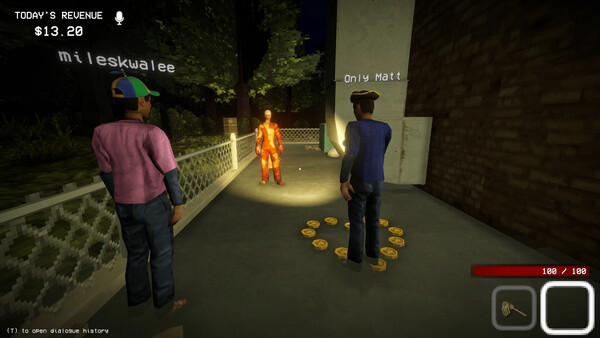
Every strategy in this guide starts from one truth: how to win is decided by who makes fewer fatal mistakes, not who plays flashier.
Counter & Gas Pump Priority System
The store runs on customer service, and customer service runs the store's clock. Do this: keep the counter and gas pump manned before any other task. The result: customers get served promptly, your rating holds, and — most importantly — no customer slips past you into the night while you're restocking a shelf. Quiet periods are for shelves, cleaning, and traps. A customer at the counter is never "later." That single priority order is how to win the early nights before monsters even exist. Master it and you've learned how to win the store before the monsters arrive.
The Layered Detection Workflow (Step-by-Step)
When customers arrive in waves, don't try to fully process each one in order. Do this: serve the first customer, and while the transaction runs, watch the next customer's behavior from the corner of your eye. If anyone looks wrong, hold them at the counter — finish the current sale, then give the suspicious one the full check. The result: doppelgangers can't slip through the busy period, and you never rush a verification. This layered workflow is the difference between a clean night and a night that ends with a monster in the store. When customers outnumber your attention, that layering is how to win the rush.
When to Execute vs When to Wait
Do this: the moment a customer fails the verification, execute before they complete payment. The result: a dead doppelganger stays dead, and the monster it would have become never spawns. Do the opposite — let them pay first, thinking you'll handle it — and they bolt out the door and come back as a monster mid-shift. The only time to wait is when the customer is still passing your checks. Verify, decide, act. That timing discipline is how to win the counter game every single shift — refuse to hesitate and the decision makes itself.
Doppelganger Detection Mastery
Doppelganger detection is the single skill that decides how to win or lose Shift At Midnight, and it is fully learnable.
The 3-Step Verification Process
Every doppelganger in the game is caught with the same three steps, in order. Step one: scan the customer's N.E.T. ID and cross-reference it in the computer system — a name, date, or purpose that doesn't line up is a red flag. Step two: ask a question about their visit; real customers give natural, varied answers, while doppelgangers fall back on scripted responses. Step three: watch how they move — stillness, mechanical motion, and delayed reactions are tells. Do all three on every customer, every night, and you'll catch virtually every fake before they reach the register. That is the honest, boring secret to how to win this game: the workflow, applied without exceptions. Learn it once and you know how to win every customer interaction from Night 1 to the final night.
Red Flag Behaviors (Instant Kill Triggers)
Some behaviors are so consistent that they're effectively confirmation. Do this: treat unnatural stillness at the counter as a trigger for a full re-check. Treat repetitive, scripted answers to different questions as confirmation. Treat avoidance of eye contact, delayed reactions, and mechanical movement as the same. The result: you act on the tells instead of waiting for a "sure thing," and the doppelganger dies before it can bolt. Every one of the 56 doppelganger-capable customers documented so far on the Characters page has a documented visual tell — the misspelled nametag, the missing jewelry, the wrong-side scar. Learn them, and detection stops being a gamble — that's how to win the identification game without relying on luck.
Communication Shorthand for Co-op Squads
In co-op, the player who spots the tell must move the whole squad instantly. Do this: standardize three words — "check" for a customer who needs a closer look, "execute" for a confirmed doppelganger, and "hide" for a monster alert. The result: a teammate who saw the tell can call it in one word, and the squad acts as one unit instead of four players each doing their own thing. In a game where a three-second delay means an escaped fake, that shorthand is how to win the co-op detection game. Use it and your squad will know how to win before the doppelganger knows it's caught.
Boss Survival — Beating All 7 Monsters
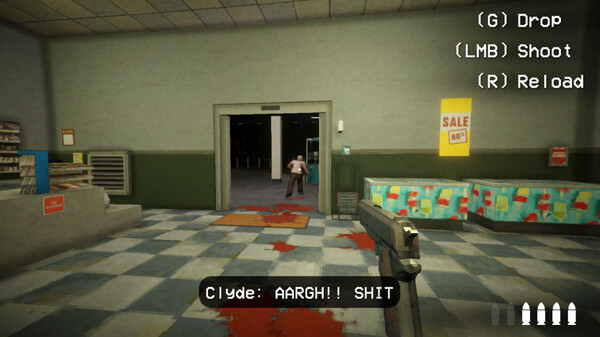
Each boss is a different puzzle, but they share one rule: preparation beats reflexes. Here's how to win each fight.
Pre-Boss Preparation Checklist
Boss fights are won before they start. Do this, in this order, during every quiet window: place two bear traps at chokepoints (front door, bus stop, hallway junctions); board up the doors of your designated safe room; memorize the nearest ventilation route. The result: when the hunt starts, you fight on your terms — traps already down, escape already mapped, no scrambling mid-panic. A prepared squad can turn the Fast Red Creature — an enemy that disables all weapons — into a one-trap cleanup. That preparation is how to win every boss encounter, not just survive it.
Per-Boss Quick Strategy (Dentist / Phantom / Gnome / Demon / Screaming / Fast Red / Bus Driver)
- The Dentist (final boss): One player kites in wide circles while everyone else deals fire damage — The Dentist is fire-vulnerable. Never get cornered; retreat through the vents to regroup. Do this and the final boss becomes a marathon, not a panic — that's how to win the final fight.
- The Phantom: It only moves when you're not looking. Maintain eye contact, walk backward to a pre-placed bear trap, and let the trap do the work. Look away for one second and you're dead — discipline is the whole strategy, and the trap is how to win it.
- The Gnome: Three appearances (shelves, car, motorcycle), all time-sensitive. Always use a firearm, never chase with a bat. Shoot it fast, every time — how to win against the Gnome is speed.
- The Demon: The only boss you never attack — every hit makes it faster and stronger. A chest spawns with music 10–15 seconds before it emerges; evacuate when you see it. How to win against the Demon is to not fight it at all.
- Screaming Creatures: They slow you, then jump forward. Dodge sideways at the last moment — never backward — and they land past you. Prioritize them over other monsters because the slow can chain-stun you; dodging sideways is how to win the exchange.
- Fast Red Creature: It disables every weapon. The only counter is a bear trap near the bus exit. Do this: check the bus driver first; if they're fake, don't board and don't press the exit button — the trap is how to win it.
- Fake Bus Driver: Not a fighter — a trap. Inspect the driver's seat through the window before boarding: empty seat means safe, occupied seat means doppelganger. Two players pressing the exit button with a fake driver spawns the Fast Red Creature instantly, so learning how to win the bus check saves the whole squad.
For full boss mechanics and every survival detail, see our Bosses Guide.
Entity Escape — Surviving When You Mess Up
You will miss a doppelganger eventually; the game is designed to punish it. When the monster is already in the store, how to win the escape is about the route, not the fight. Do this: head for the nearest ventilation shaft — it buys 20–30 seconds of safety before the flesh pushes you out — and plan where you exit before you enter. The result: you don't drop out of the vent into a second monster's path, and you live to re-join the counter. A controlled retreat is a win; a panicked one is a death. Master the route and you've learned how to win even the nights that go wrong.
Squad Optimization — Winning as a Team
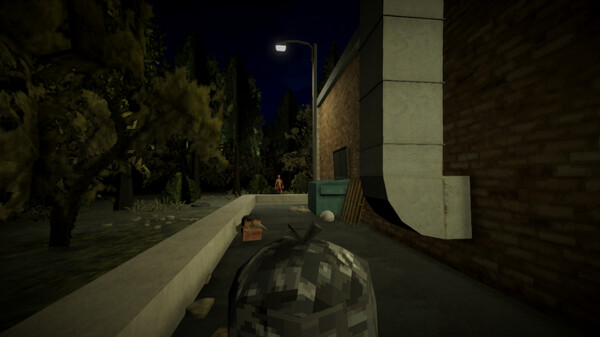
Shift At Midnight is built for co-op, and how to win with a squad is different from how to win solo.
Role Assignment Matrix (Who Does What)
Four players doing everything is how squads lose. Do this: split the store into three jobs — one player owns the counter and gas pump, one owns paperwork and doppelganger detection, one owns bear traps and boarding, with the fourth rotating to wherever pressure is highest. The result: the detection player never gets pulled off a customer to pump gas, the trap player has traps down before the hunt starts, and nobody is doing two jobs badly. Rotate roles between shifts to keep everyone sharp. That division of labor is how to win as a squad night after night — the matrix turns four individuals into one store.
Proximity Chat Tactics
Proximity chat means your callouts only work if your team is close — which is a feature, not a bug. Do this: keep the detection player near the counter with the rest of the squad within earshot, and standardize one-word callouts ("check," "execute," "hide," "trap set," "venting"). The result: information travels in a second, and the monsters — who also hear the noise — have less warning than your squad does. How to win the comms game: be loud, be brief, be close.
How to Carry a Weaker Teammate
Not every squad member is equally confident in the workflow. Do this: put the weaker player on the safest job — stocking, cleaning, and counter service during quiet stretches — while the strong players handle verification, execution, and boss kiting. The result: the weaker player contributes without becoming the liability that spawns monsters, and the strong players stay free to do the high-stakes work. In boss fights, assign the weakest player the "eyes" role — calling out monster positions — so they contribute without risking the run. That's how to win with a mixed-skill squad instead of losing because of one — how to win is using the squad you have, not the squad you wish you had.
Endless Mode Strategy
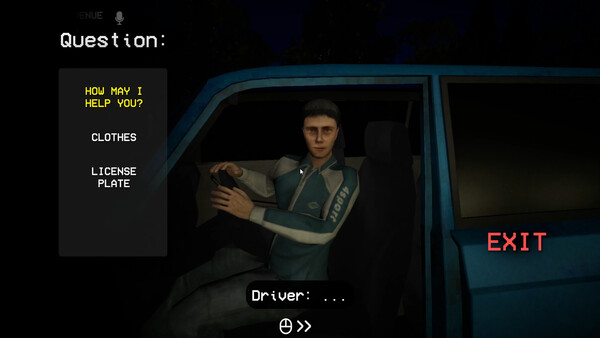
Endless Mode is where everything above gets stress-tested. Here's how to win a run that never ends.
Scaling Difficulty — What Changes Each Night
Endless Mode compounds every night: more customers, a higher doppelganger ratio, more frequent monster spawns, and Rakes pressing in from the forest. Do this: assume each night is strictly harder than the last and never spend resources on comfort. The result: you're never surprised by the scaling, and your trap stockpile keeps pace with the threat curve. How to win Endless Mode starts with respecting that curve instead of treating night 5 like night 1.
Resource Management Over Long Runs
Bear traps, ammunition, and board-ups don't reset between Endless nights — every trap you burn is gone forever. Do this: stockpile traps in the first few nights while income is still comfortable, keep at least two in reserve at all times, and only spend ammunition when a customer or monster is a confirmed threat. The result: at night ten, you still have the tools to answer a Fast Red Creature or a Phantom, while squads that spent freely are defenseless. Resource discipline is how to win long Endless runs.
When to Cut Your Losses
In Endless Mode, a lost player is not the end of the run — the mode ends when ALL players die. Do this: if a player goes down and the store is swarming, stop trying to save them and pull the survivors into the safe room. The result: one death costs you one player instead of the whole run. The same logic applies to tasks: if a restock would pull you off the counter during a busy wave, skip it. Survival is the only score that matters, and knowing when to abandon an objective is how to win the nights you have no business surviving.
FAQ
How do I win my first shift at midnight?
Learn the 3-step verification on Night 1 and apply it to every customer. Night 1 is scripted: Clyde Dawson is always human, customers 3–4 are doppelgangers, and the rest are safe. Execute the two fakes before they pay, serve the rest, and the night is yours — that's how to win Night 1.
What's the fastest way to beat Story Mode?
Don't fight monsters — prevent them. A squad that catches every doppelganger at the counter with the 3-step workflow sees far fewer boss encounters, which is the single biggest time saver in the campaign. Beat all 13 nights and secure the True Ending to unlock Endless Mode. For speed, how to win is prevention, not reaction.
Can I win solo in Shift at Midnight?
Yes. Solo play changes the workload, not the strategy: you own the counter, the verification, and the traps yourself, so use quiet periods aggressively to prepare. Bear traps matter more solo — the Phantom and Fast Red Creature are far harder without a teammate to set them for you. Learning how to win solo starts with accepting that workload.
How to Win — The 30-Second Summary: Check every ID and question every customer (how to win detection). Execute before payment (how to win the counter). Keep two bear traps in reserve and always check the bus driver (how to win the bosses). Assign roles and use one-word callouts (how to win as a squad). Stockpile early and skip low-value tasks in Endless (how to win the long run).
Next steps:
> Related Guides
Get Shift At Midnight on Steam
$8.99 (normally $9.99) • Very Positive • Free Demo Available
View on Steam →